


Madison Logic is an enterprise-grade account-based marketing platform which promises to focus your firepower on high-value targets.
But in practice, many such ABM tools come loaded with features, hefty price tags, and a steep learning curve.
In this article, I’ll show you all that Madison Logic offers, its reviews, help you decide if it’s actually the right fit for your ABM strategy, and discuss where a lean alternative like ZenABM might make more sense, or may even serve as a complementary layer due to its unique features.
Let’s get started!

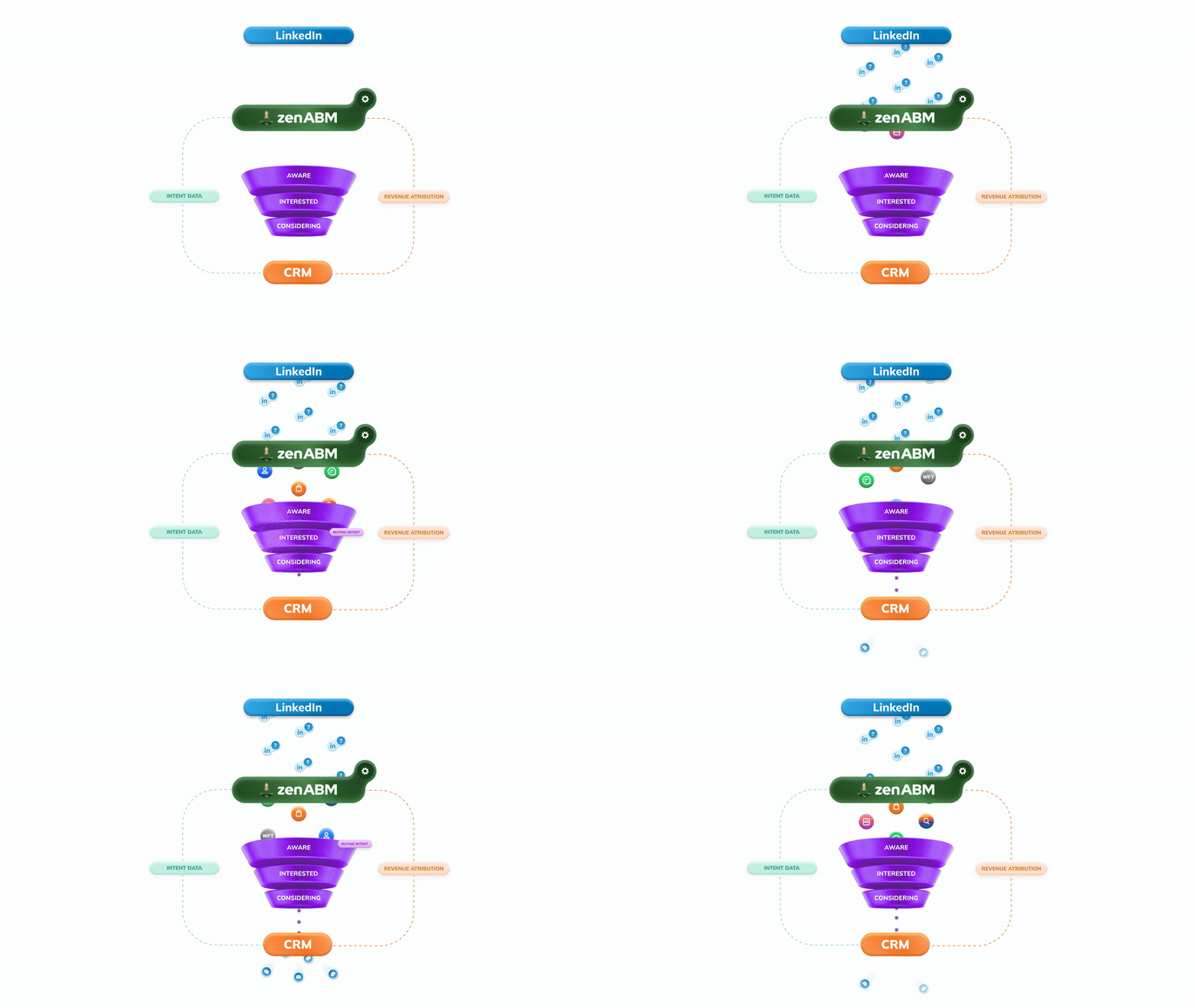
In case you want it short:
Madison Logic’s Activate ABM™ platform bundles together multiple channels and tactics under one roof.
Key features include:
Madison Logic unifies content syndication (rare feature), display advertising, LinkedIn ads, connected TV (CTV), and audio advertising into a centralized platform.
This means you can engage your target accounts with content and ads on every possible channel, from webinar whitepapers to LinkedIn Sponsored Posts to streaming TV commercials.


A big selling point is Madison Logic’s data.
The company boasts 20+ years of B2B intent signals, combining multiple sources and proprietary engagement data to predict when accounts are “in-market.
They tout eye-popping scale: 45 million accounts and 417 million professional contacts across 129 industries in their database.
This data feeds an AI-powered ML Insights engine to score and prioritize accounts showing buying intent.
Madison Logic will take your whitepapers, ebooks, or other content and syndicate them across its publisher network to generate leads from your target accounts.
Essentially, they run campaigns to get prospects from those companies to download content (often via gated forms), yielding contact leads (Marketing Qualified Leads).
However, some marketing professionals note that content syndication can be a blind network.
One Reddit user described content syndication as “a blind network with no way of filtering out-of-spec leads,” meaning you might not know exactly where leads are coming from or how pristine they really are.

The platform can run programmatic display advertising targeted by account, as well as LinkedIn ads targeted to your account list.
Madison Logic is a LinkedIn Marketing Partner, integrating so you can use your Madison Logic account lists to hit prospects on LinkedIn as part of a coordinated campaign.
The idea is to maintain cross-channel account engagement, showing a unified presence via display banners, social ads, etc., to all members of the buying committee across their journey.
Of course, whether those display ads are effective or just wallpaper is debatable (banner blindness and bot fraud, remember?).

In a bid to cover every channel, Madison Logic even offers targeted CTV and digital audio advertising.
This is a differentiator – few ABM platforms boast TV and radio, and it sounds cool to tell your CMO you’ve got an omnipresent campaign.

Madison Logic’s ML Measurement dashboards and the newly launched ML Intent Dashboard aim to give full visibility into how accounts are engaging and how that translates to pipeline and revenue.
The Intent Dashboard (rolled out in Nov 2025) consolidates intent signals, engagement data, and even competitive benchmarks into one view.
It can suggest “next best actions” like which hot accounts or trending topics to pursue.
Madison Logic also provide charts for account engagement, cross-channel performance, pipeline impact, and account-stage progression.

Madison Logic built its ABM edge on deep intent data expertise.
Its data arm even spun off to become Bombora in 2015.
Today, Madison Logic’s platform still draws from that legacy, combining first-party engagement signals with third-party sources like Bombora Company Surge, plus firmographic and technographic data.
Their ML Data Cloud claims to tap into two decades of behavioral data to help identify high-potential accounts.
Targeting happens across multiple channels using firmographics and job data, allowing teams to hone in on specific roles and regions, whether through content syndication, display ads, or LinkedIn.
Of course, third-party intent data based on keyword surges has its limits.
The platform can flag signals when, say, multiple people from a company read content on a topic, but that doesn’t always mean they’re ready to buy.
Some users on G2 report receiving lots of top-of-funnel leads, highlighting that data quality can vary.

Pro Tip: ABM platforms like Madison Logic that rely on third-party keyword surge data often surface top-of-funnel leads/accounts that might be curious but aren’t truly ready to buy. This type of intent data usually costs extra and, being third-party, lacks context and precision. ZenABM takes a smarter route. It captures first-party qualitative intent by tracking how specific companies engage with your LinkedIn ads down to each ad creative. You can tag campaigns by theme (e.g. Feature A vs. Feature B), and ZenABM will group companies showing interest in each message. That means you’ll know not just who is engaging, but what they’re interested in, so your sales and follow-ups are hyper-relevant from the start.
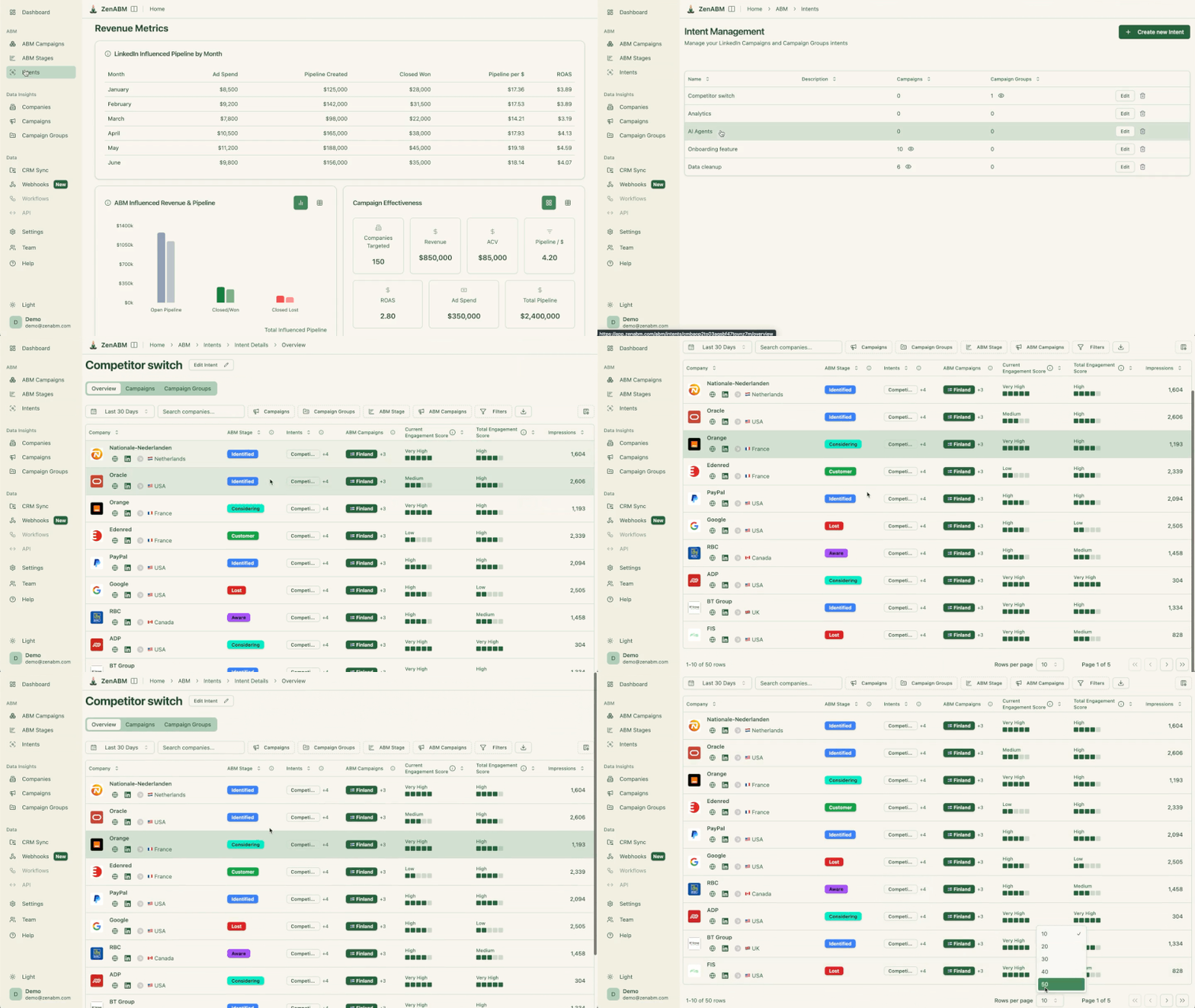
Madison Logic offers solid integration capabilities across major CRM, marketing automation, and sales enablement tools, making it a fit for complex B2B stacks, though setup and flexibility vary by use case.
| Platform | Integration Details | User Notes |
|---|---|---|
| Salesforce (CRM) | Embeds account insights and engagement data; ties campaigns to pipeline. | “The integration with Salesforce is everything when it comes to our reporting.” |
| HubSpot, Marketo, Pardot (MAP) | Pushes leads and engagement data into nurture streams; CRM sync. | Some users reported initial setup hiccups and fallback to CSV imports. |
| LinkedIn Marketing Solutions | Exports account segments directly into Campaign Manager for activation. | Saves time and sync costs. “Streamlines the activation process.” |
| Gong | Feeds insights into call scripts and follow-ups based on intent data. | Used to personalize sales engagement via AI-driven cues. |
| Convertr | Enriches leads in real time with intent scores and topics of interest. | Helps route qualified leads faster to the right workflows. |
| Adobe Experience Platform | Feeds intent data into Adobe’s orchestration tools (e.g. Journey Optimizer). | Enterprise-level support for full-funnel personalization. |
One thing conspicuously missing from Madison Logic’s website is pricing information, never a comforting sign for budget-conscious teams.
In vendor-speak, that often translates to enterprise pricing: custom deals only, probably expensive.
However, I’ve dug up some clues:
Note: Considering that Madison Logic comes with premium pricing, ZenABM appears to be a smarter alternative, starting at ~$59/month for a starter plan and its highest tier also doesn’t exceed $6k/year. Plus, you get all you need for LinkedIn ABM: account-level ad engagement tracking, account scoring, ABM stage tracking, assignment of hot accounts to BDRs, bi-directional CRM sync, custom webhooks, qualitative company buyer’s intent tracking, job-title-level ad engagement tracking, and plug-and-play ROI attribution dashboards.
Marketing copy aside, what do actual users say about Madison Logic?
I scoured G2, TrustRadius, Reddit, and more to surface the common praise and pain points.
Pros:
 Others appreciated the consolidated approach: “It addresses fragmented data and inefficient targeting by unifying ABM insights, intent data, and performance analytics in one place,” enabling coordinated campaigns.

Cons:
One alternative to Madison Logic is ZenABM.
It is specifically designed for LinkedIn ABM, so it can either be a complete, lean and affordable alternative to Madison Logic for teams that mainly advertise on LinkedIn.
Even for teams running multi-channel ABM, ZenABM can be a complementary layer to Madison Logic or whichever bigger ABM suite they are using because of ZenABM’s unique features.
Let’s look at those features:
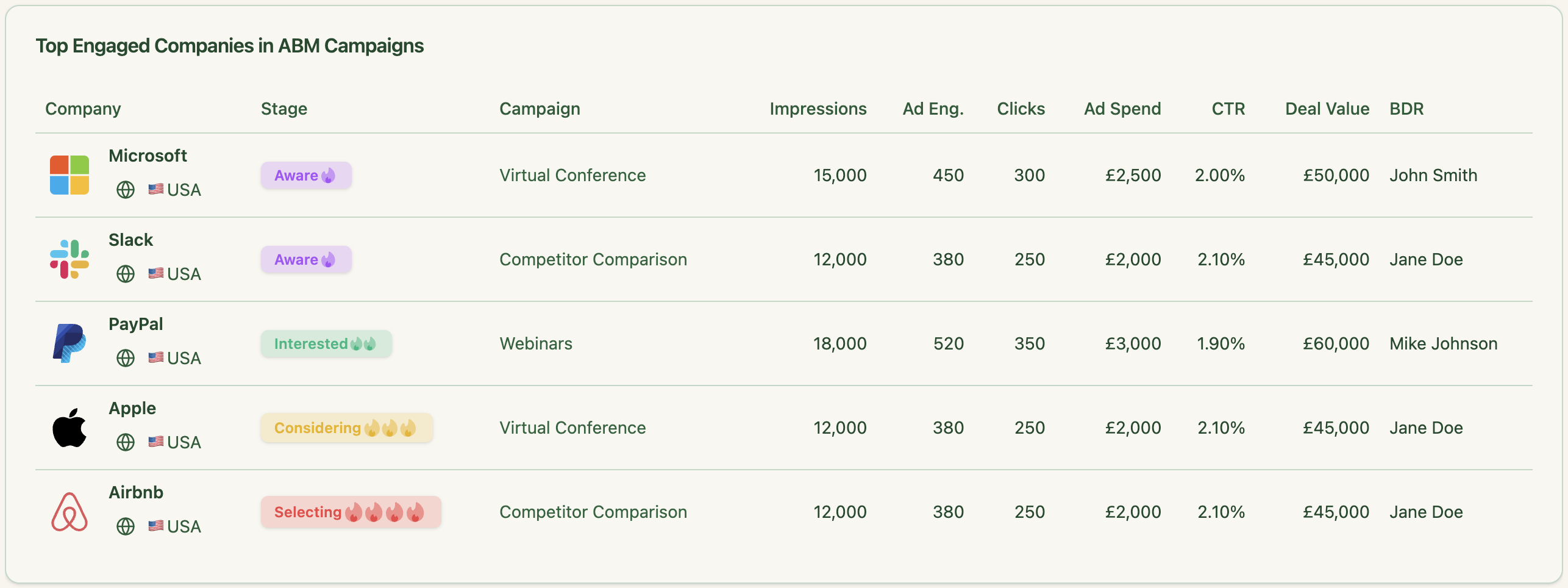
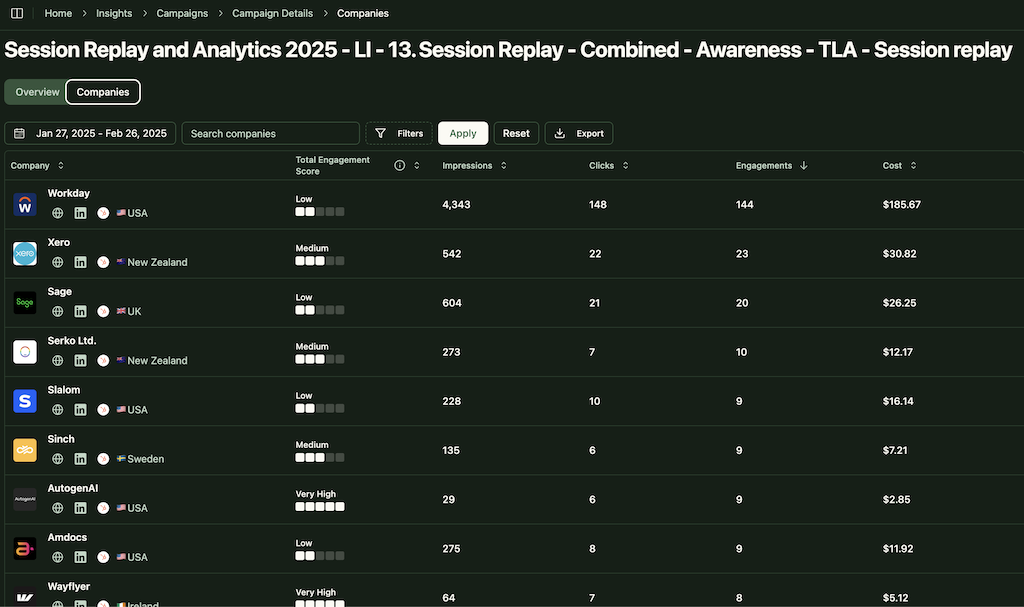
ZenABM integrates directly with the LinkedIn Ads API to pull account-specific data from all campaigns.
This allows you to identify precisely which target accounts are interacting with your LinkedIn ads (impressions, clicks, etc.), all mapped to individual companies.
Pro Tip: ZenABM can also reveal anonymous website visitors for free. Retarget them with inexpensive LinkedIn text ads, and ZenABM will identify the companies that saw your impressions.
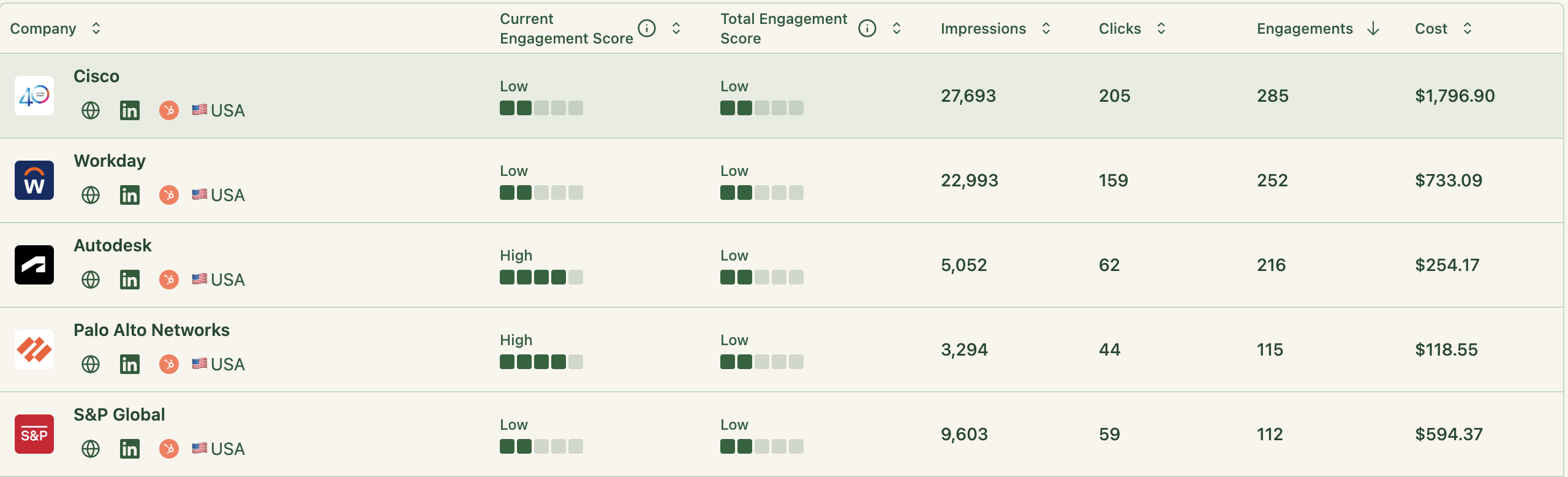
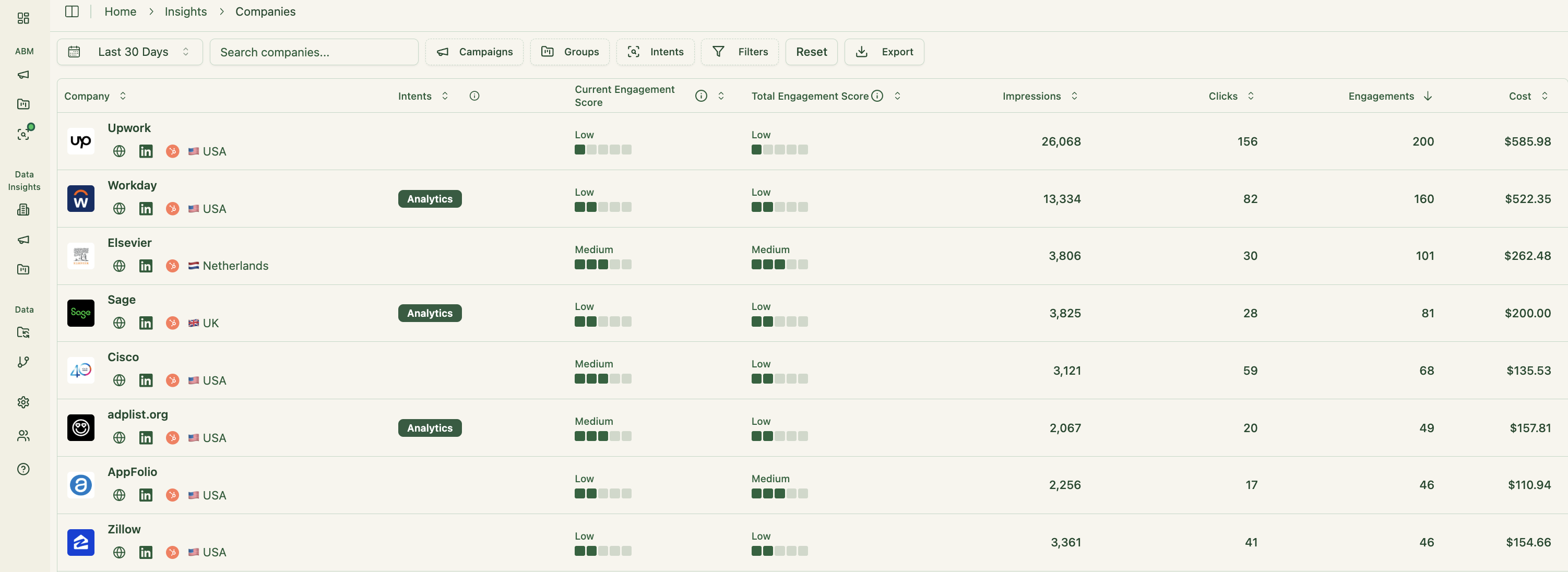
ZenABM continuously updates engagement scores from ad interactions. You can monitor recent trends (like the past week) or historical patterns to identify accounts heating up.
These scores help marketing and sales prioritize high-value accounts for follow-up.
ZenABM enables you to define your ABM funnel stages (e.g., Identified → Aware → Engaged → Interested → Opportunity) and automatically classifies accounts using engagement and CRM information.
You can set your own thresholds for “Engaged” or “Interested,” and ZenABM will track stage transitions automatically.
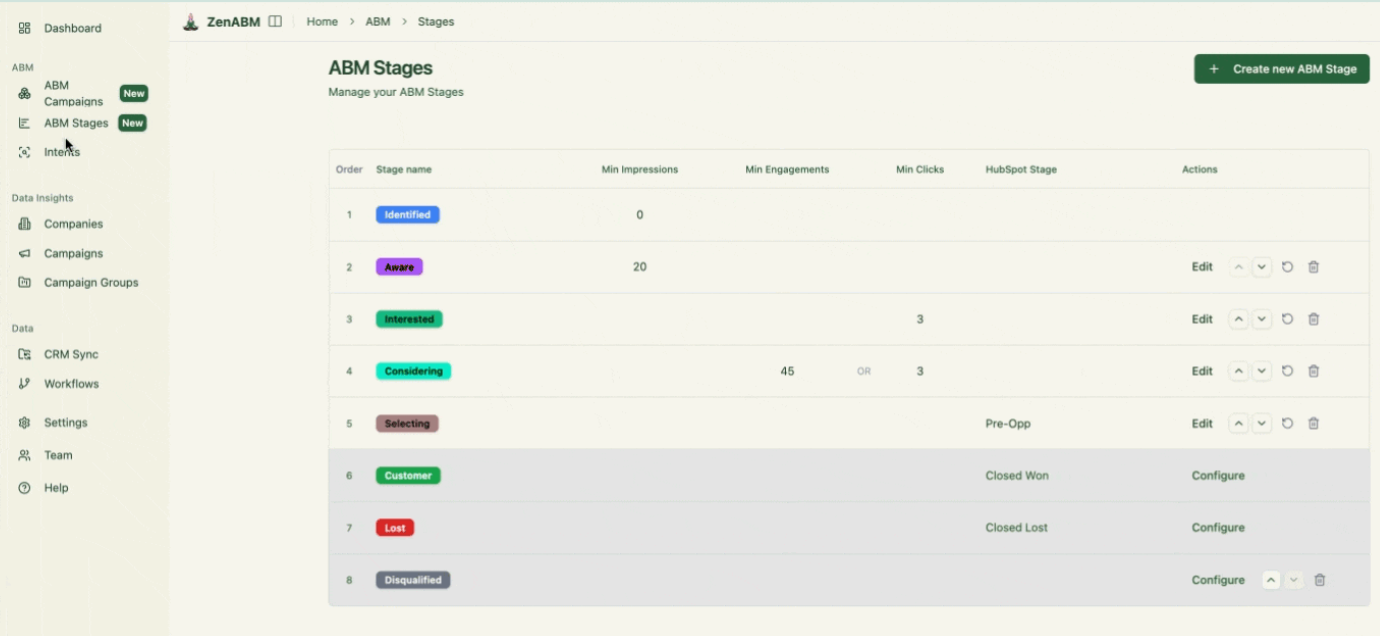
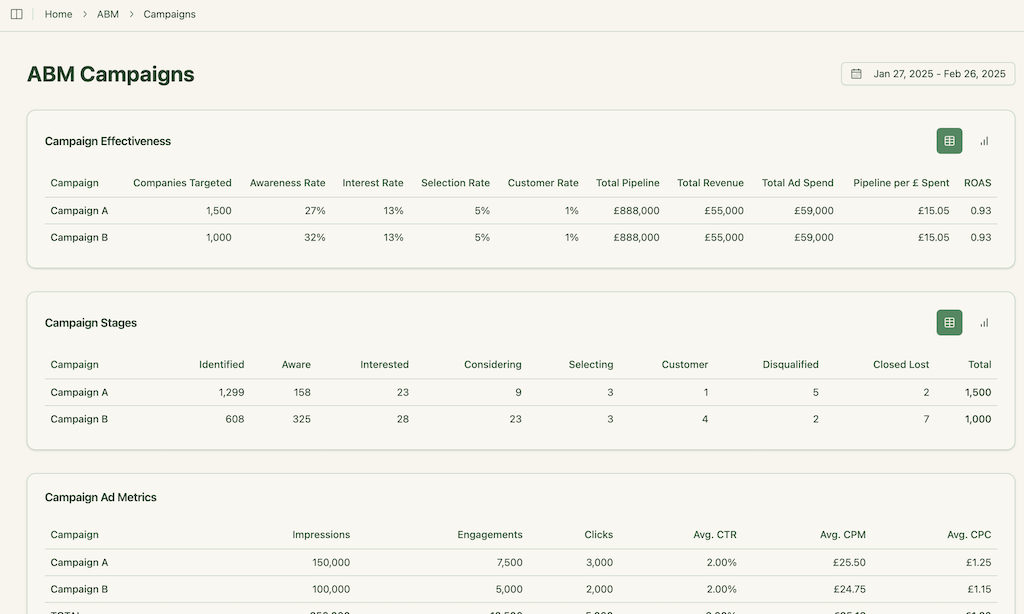
This delivers full-funnel visibility like enterprise ABM platforms, highlighting where accounts stall and where progress accelerates.
ZenABM integrates bidirectionally with CRMs such as HubSpot (Salesforce available on higher plans).
LinkedIn engagement data feeds directly into your CRM as company-level properties, keeping sales teams informed:
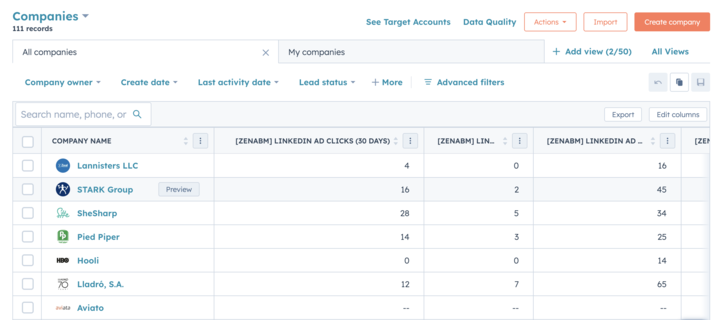
ZenABM can auto-update account stages to “Interested” when engagement passes a set threshold and assign accounts to specific BDRs for follow-up.
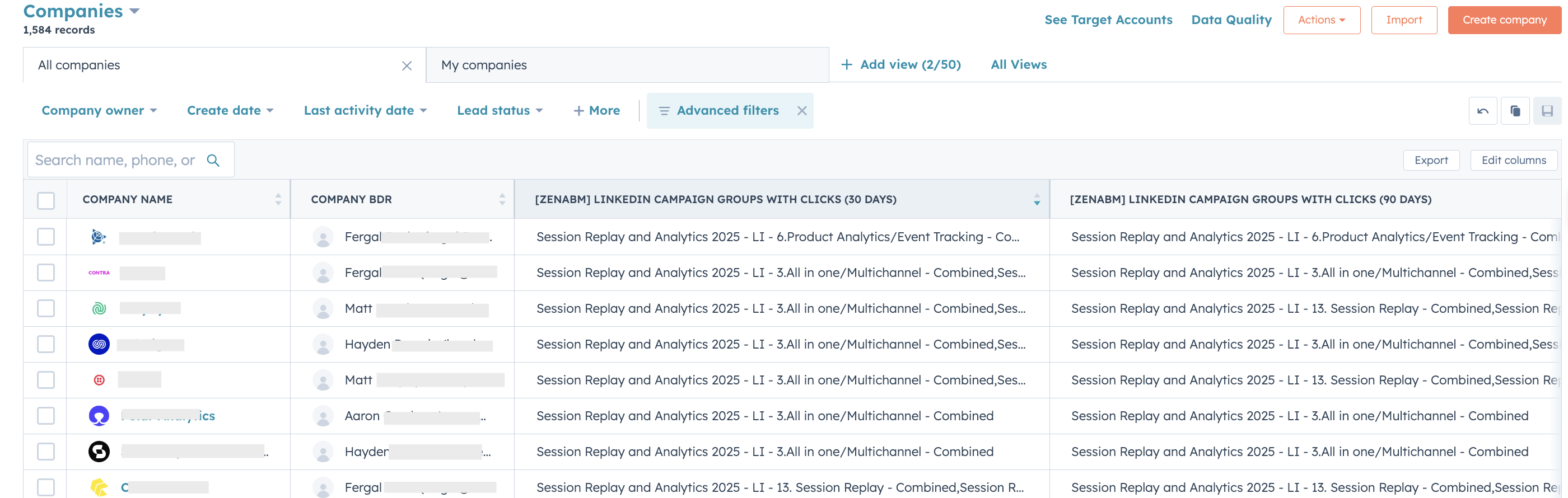
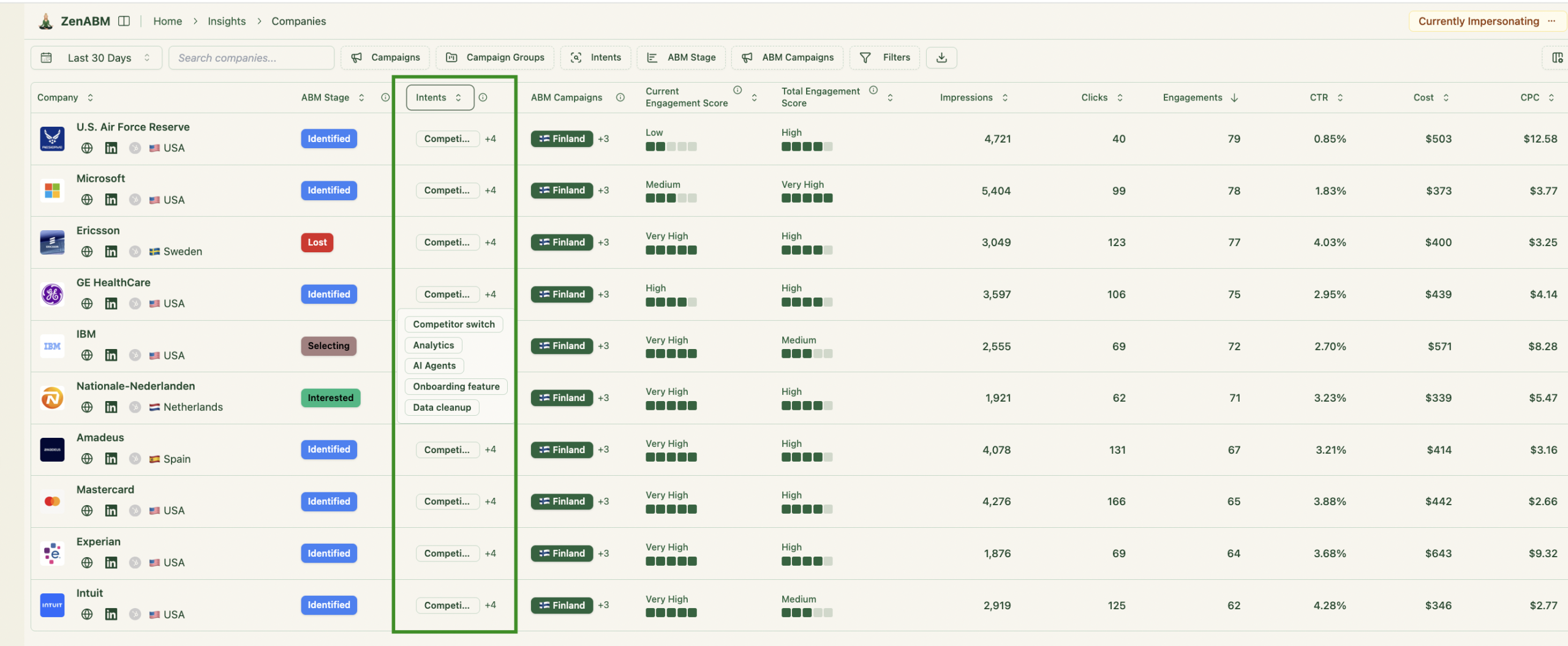
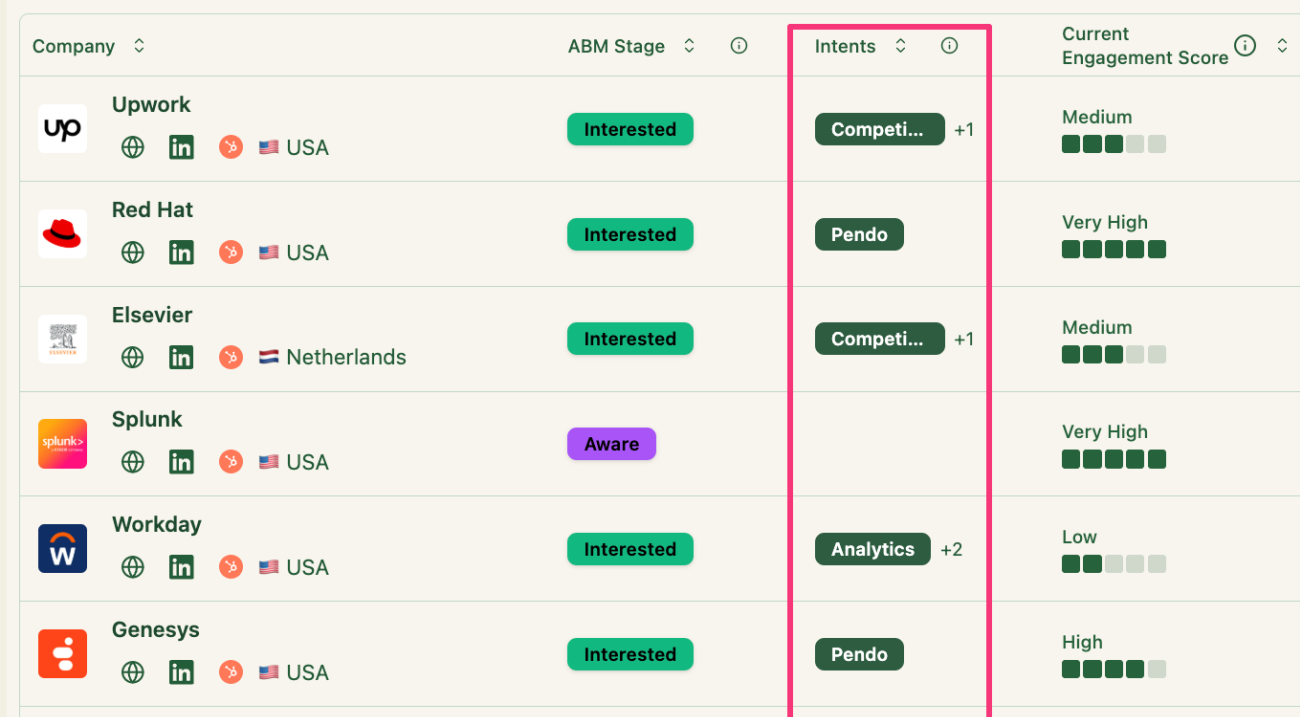
ZenABM allows you to tag campaigns by theme (like “Feature A” vs. “Feature B”) and shows which accounts engage with which themes, revealing their priorities.
This is genuine first-party intent. Instead of paying for inferred keyword interest, you get direct proof like Account Z clicking “Feature A” ads, demonstrating actual buying interest.
These insights also sync to your CRM, supporting highly targeted outreach and relevant messaging.
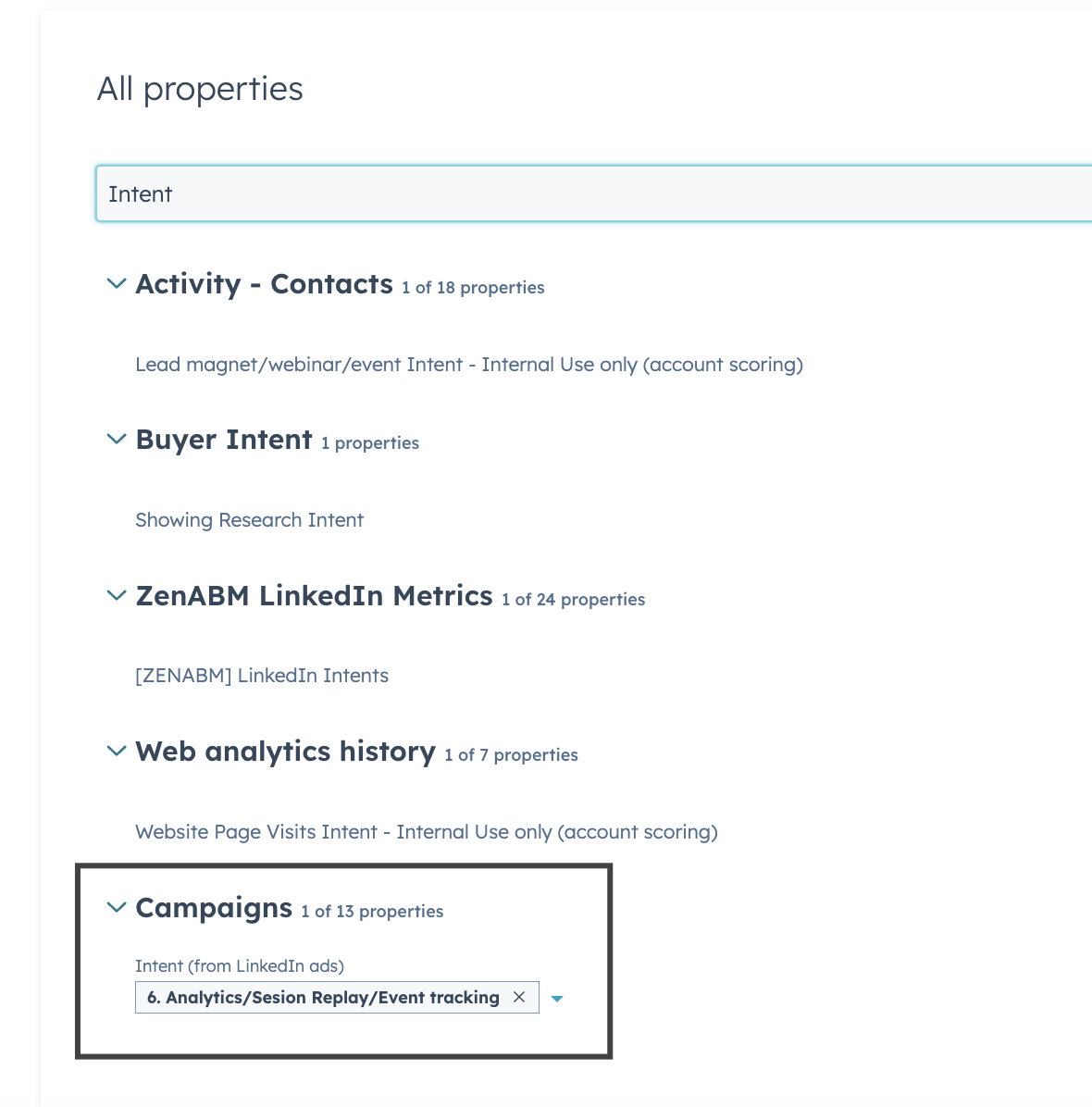
Your sales reps can instantly see which topics or pain points each account reacts to most.
This feature is fairly unique to ZenABM, making it a worthwhile add-on even if you already have an existing subscription to some other ABM tool.
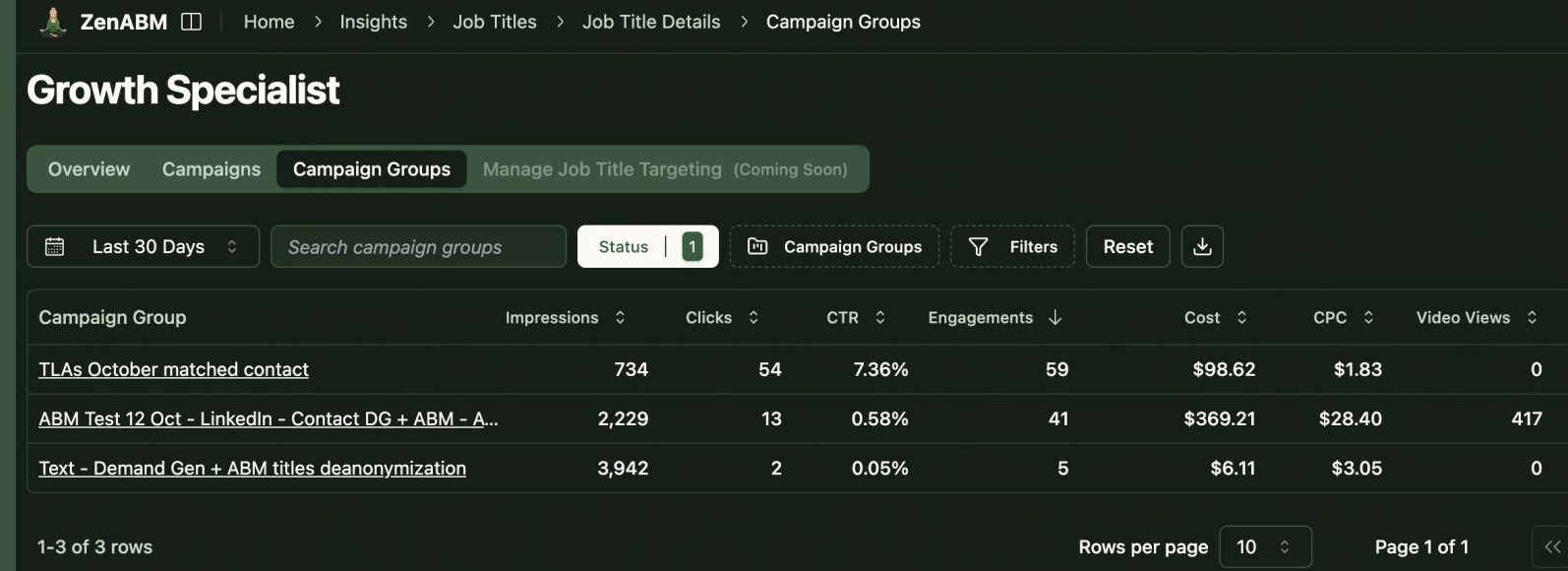
ZenABM also gives a breakdown of the specific job titles that interact with your ads.
Raw metrics, dwell time, full video funnel – all available out of the box.
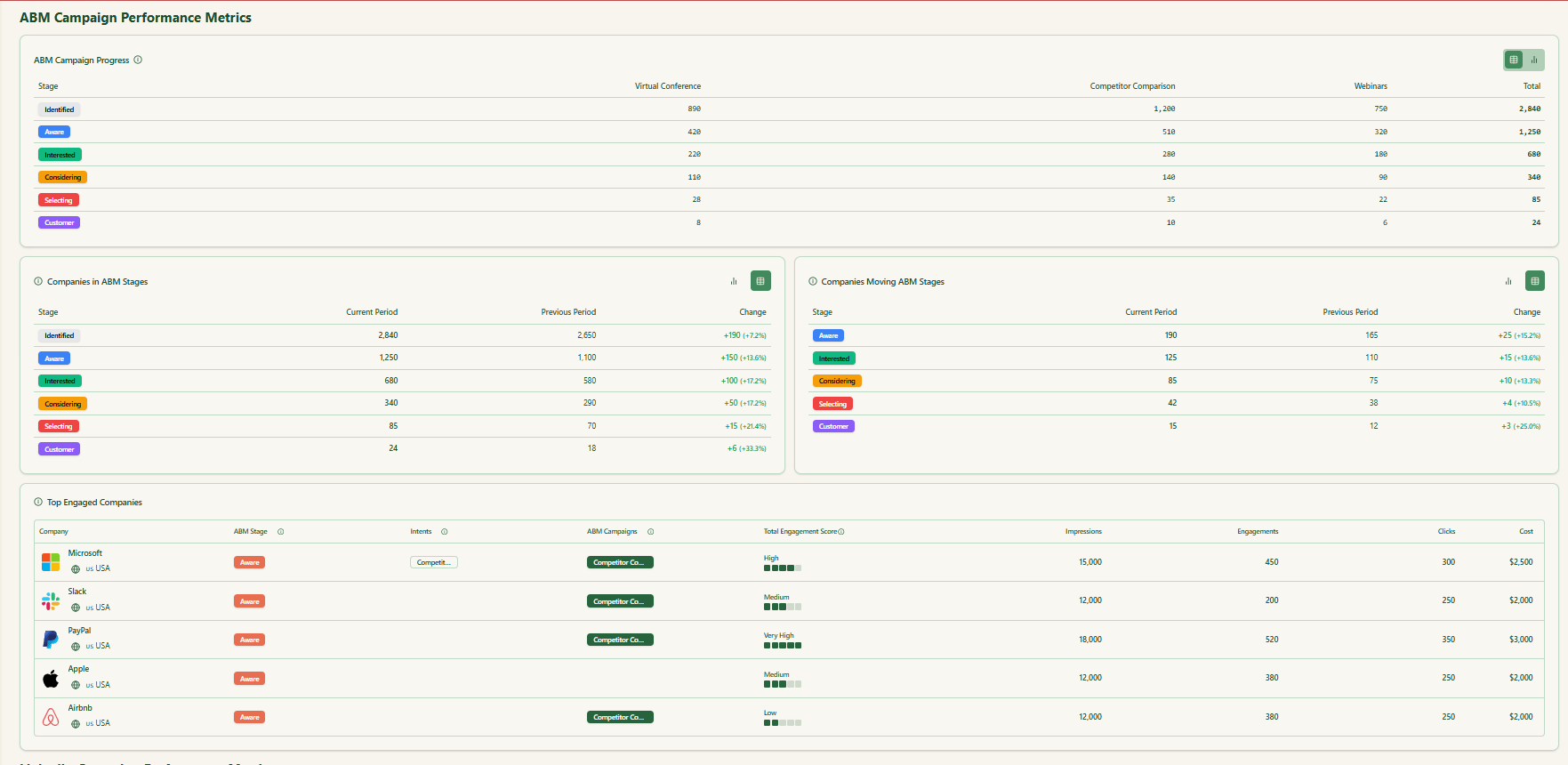
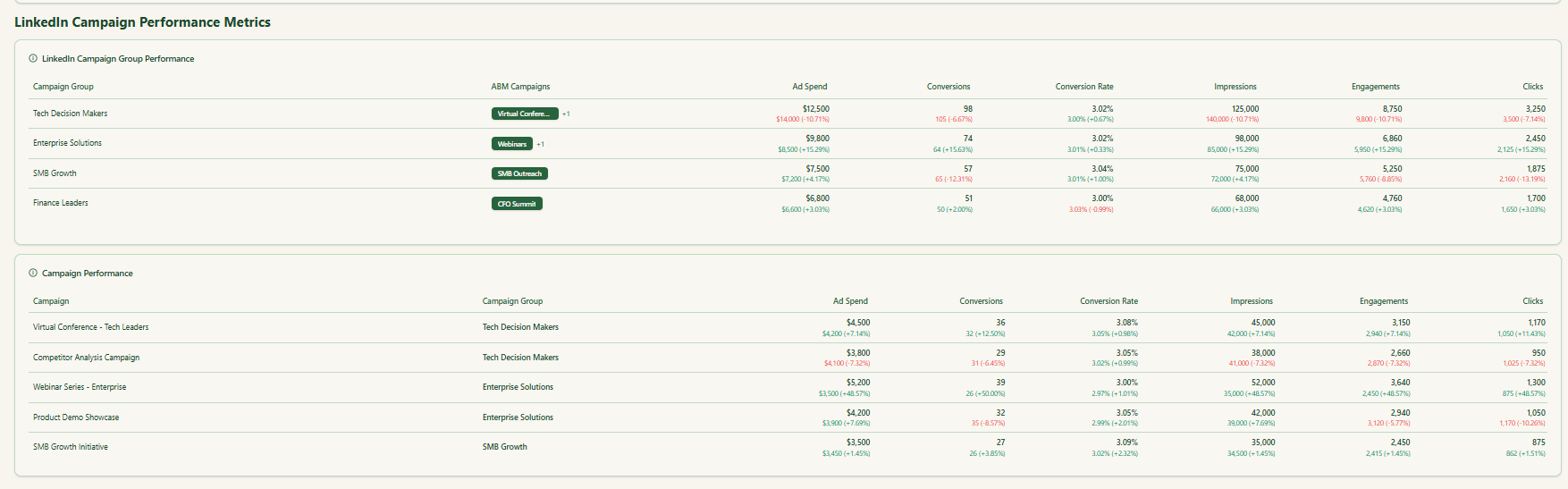
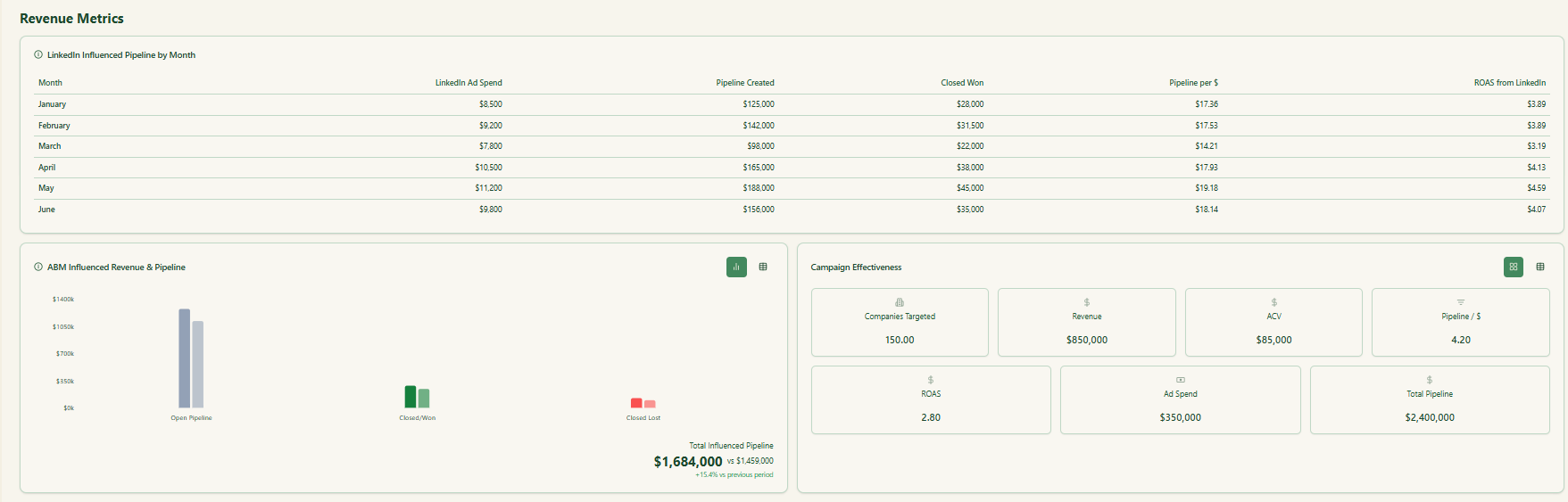
ZenABM includes pre-built ABM dashboards linking ad exposure, engagement, funnel stages, and pipeline metrics.
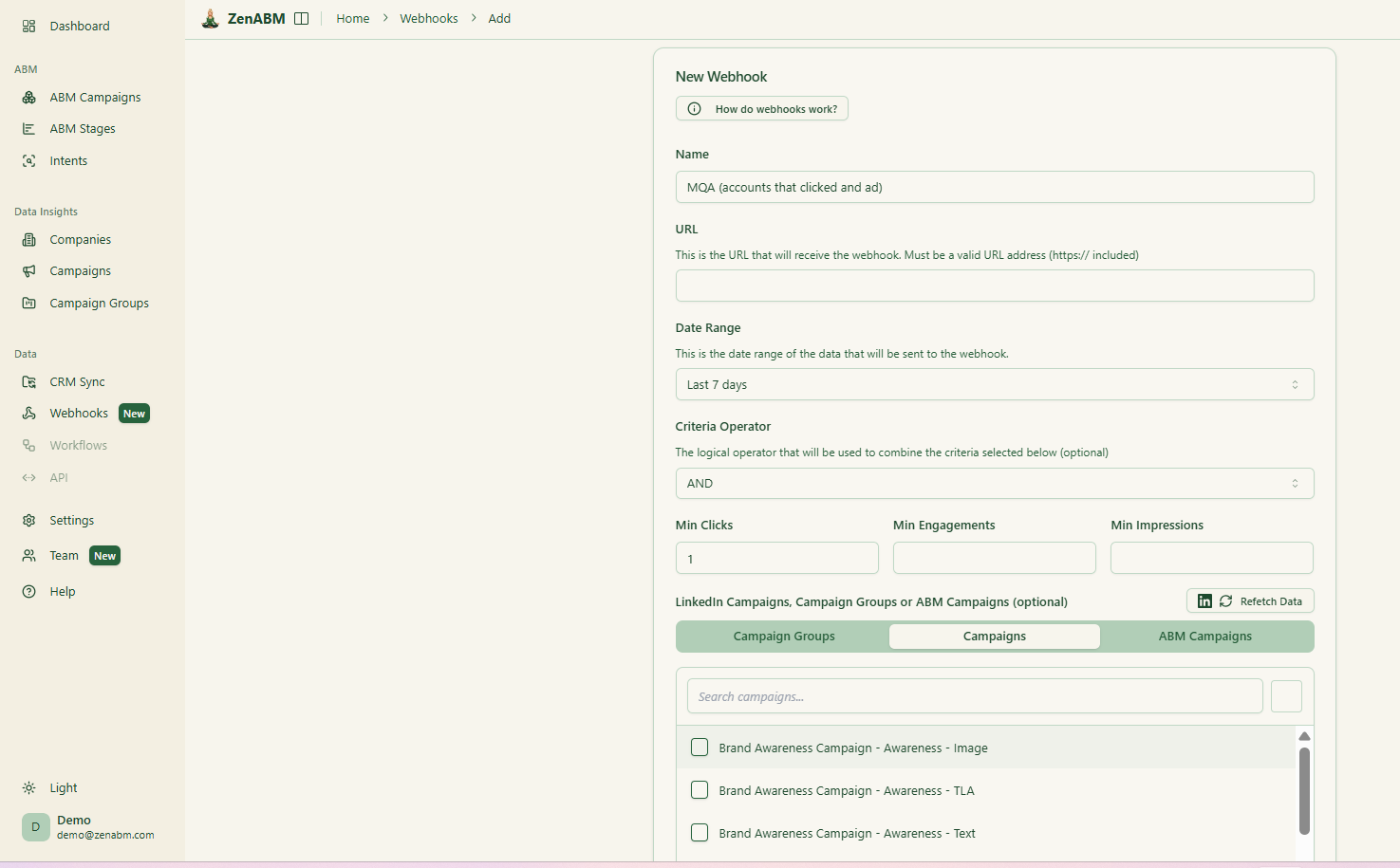
With the newly rolled out custom webhooks, ZenABM can fit into any of your workflows as needed.
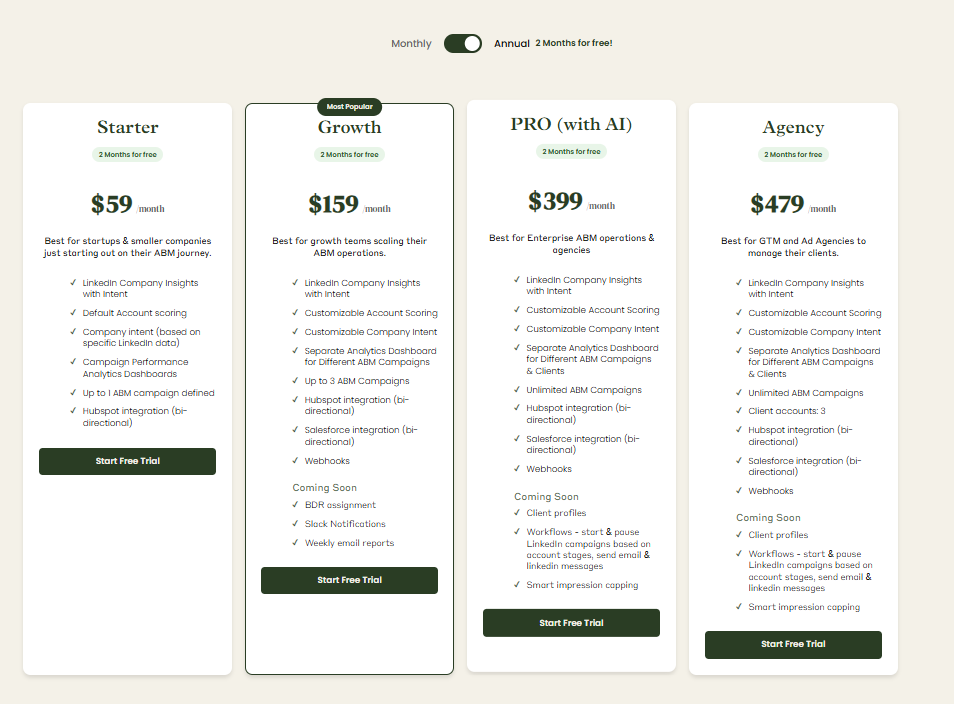
Plans start at $59/month for Starter, $159/month for Growth, $399/month for the Pro (AI) tier, and $479/month for the agency tier.
Even the highest tier costs under $6,000/year, far less than Madsion Logic.
All plans cover essential LinkedIn ABM functions, with higher tiers mostly expanding limits or adding Salesforce integration.
Pricing is flexible (monthly or annual with two months free), and a 37-day free trial allows teams to try before buying.
Madison Logic offers robust enterprise-grade ABM capabilities across channels, backed by decades of third-party intent data.
But its complexity, high cost, and reliance on top-of-funnel signals may not suit every team.
For marketers focused on LinkedIn ABM or looking for faster, leaner execution with first-party qualitative insights, ZenABM presents a high-impact alternative or complementary layer.
With deep LinkedIn ad engagement analytics, CRM integration, and flexible pricing, it’s built for modern, insight-driven B2B teams.
Whether you’re starting your ABM journey or looking to fill gaps in your current stack, it’s worth exploring ZenABM’s 37-day free trial.
